Which parts are leak tested in the defense industry?
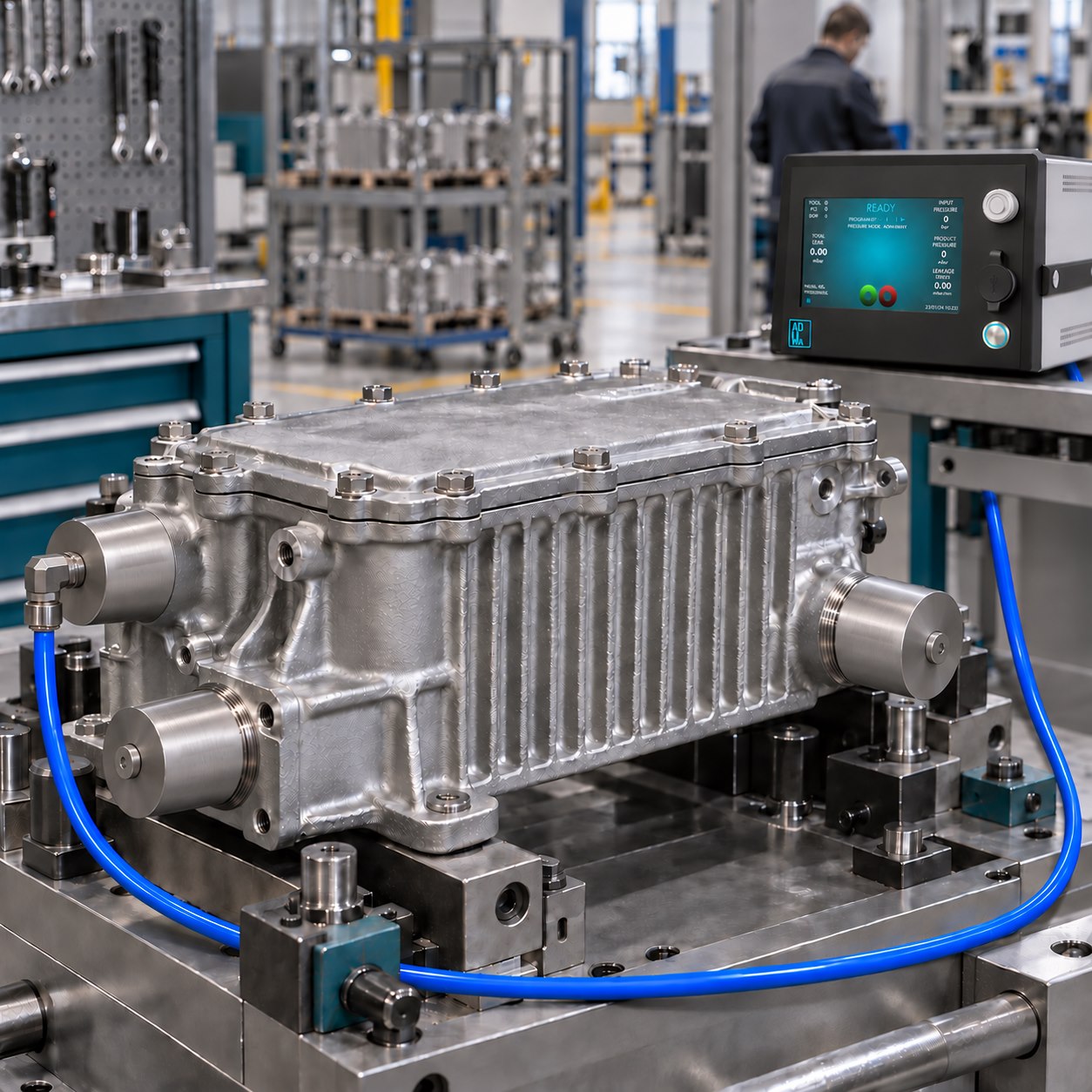
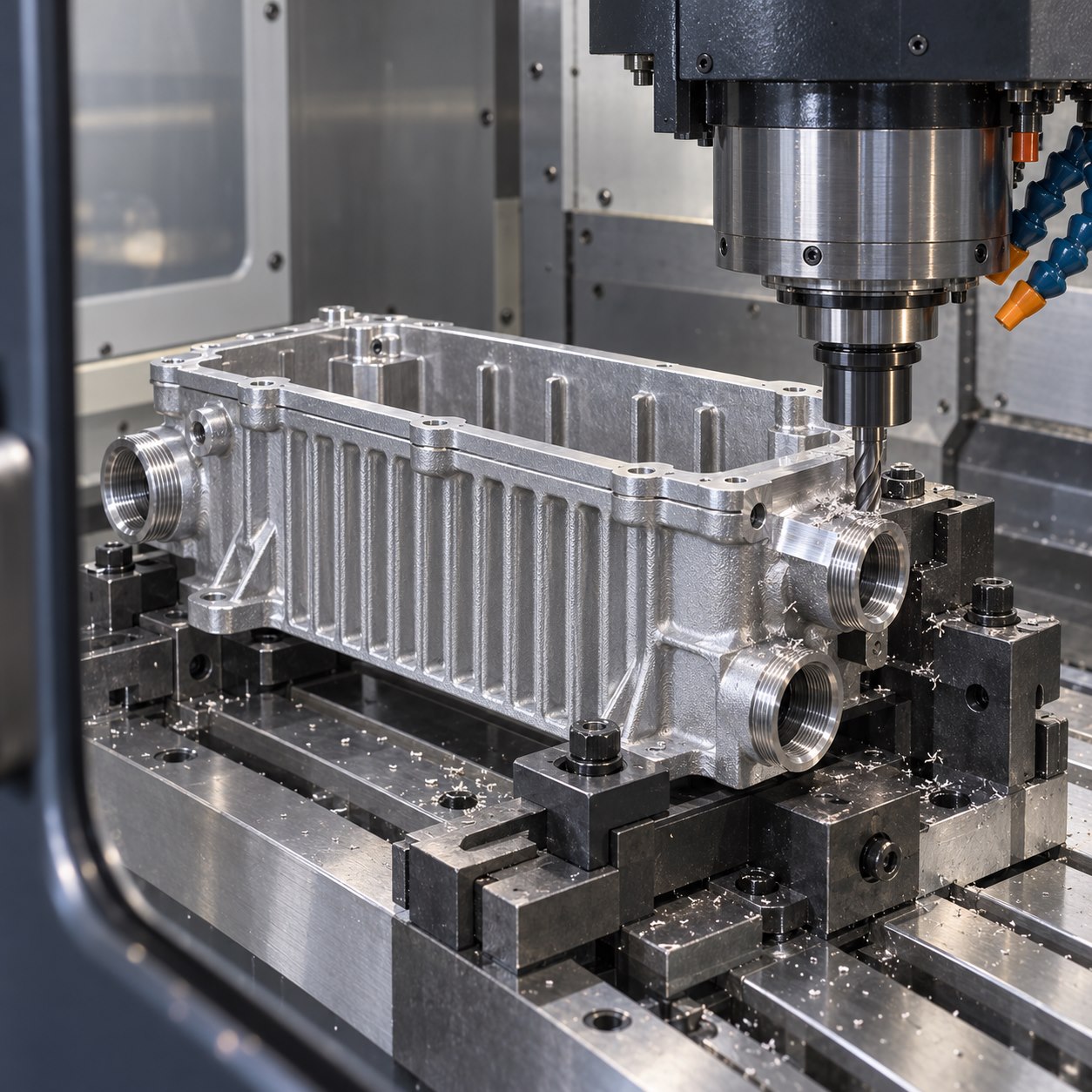
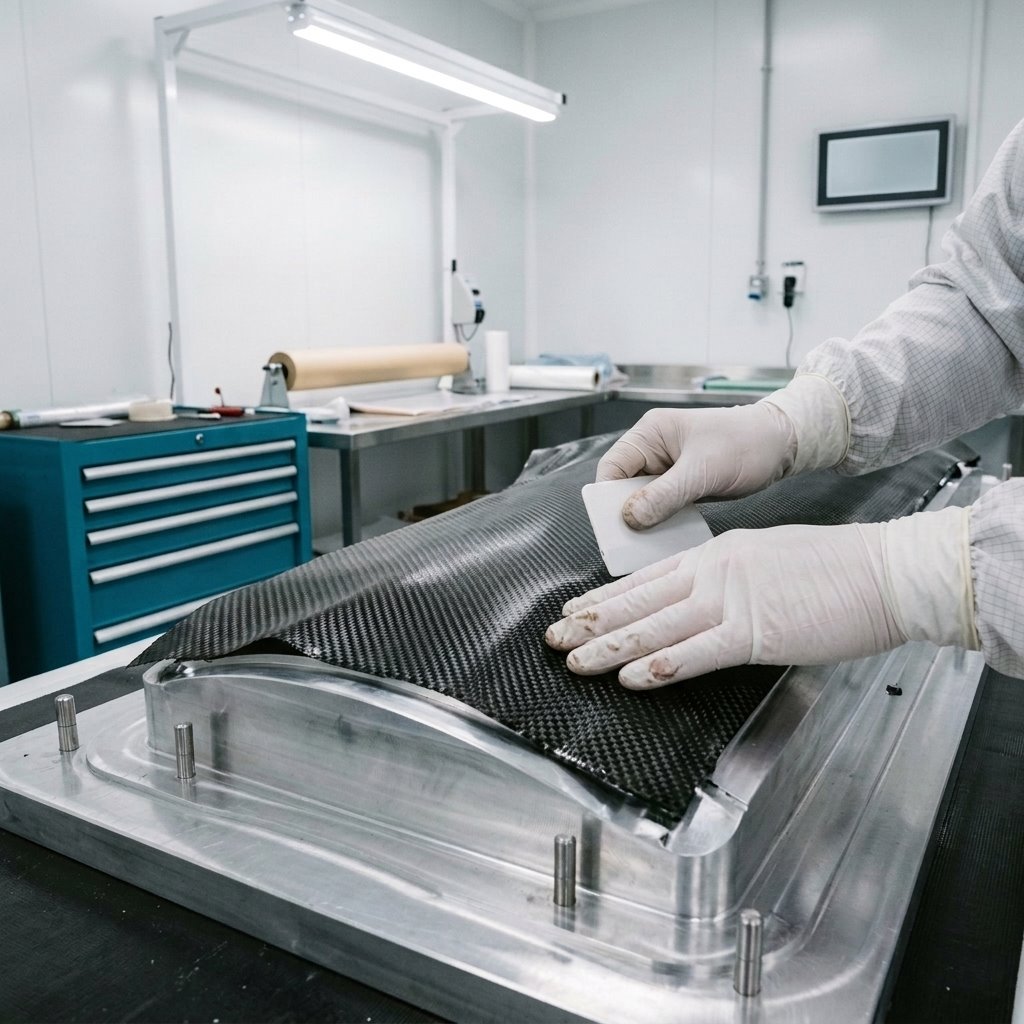
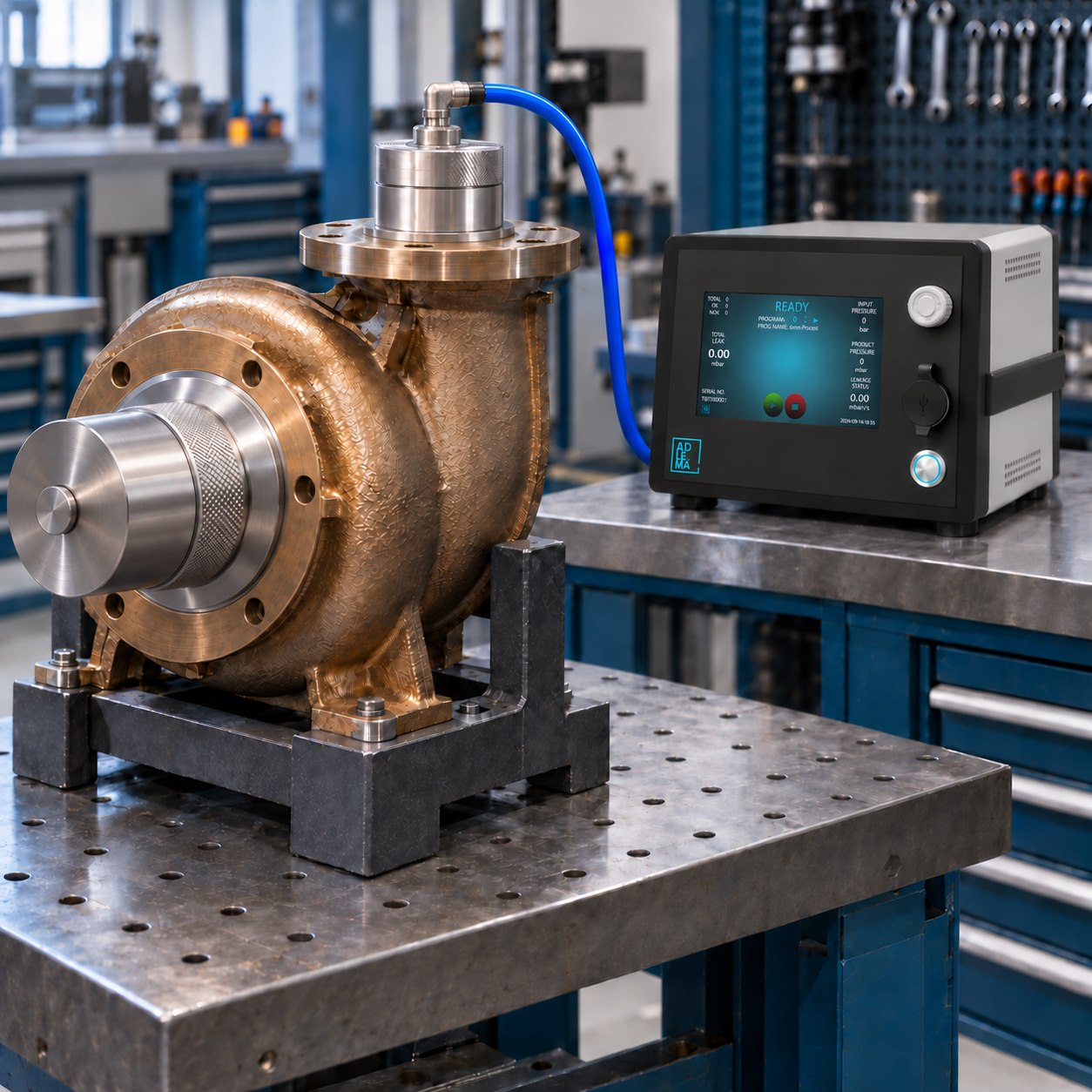
Any part that carries liquid or gas, or that must keep water and moisture out: fuel tanks and lines, cooling and hydraulic housings, pump and valve housings, electronics and avionics enclosures, connectors, electro-optical housings. The test method is chosen according to the part's volume, material and reject limit.
Can an IP67 test be done without immersing the part in water?
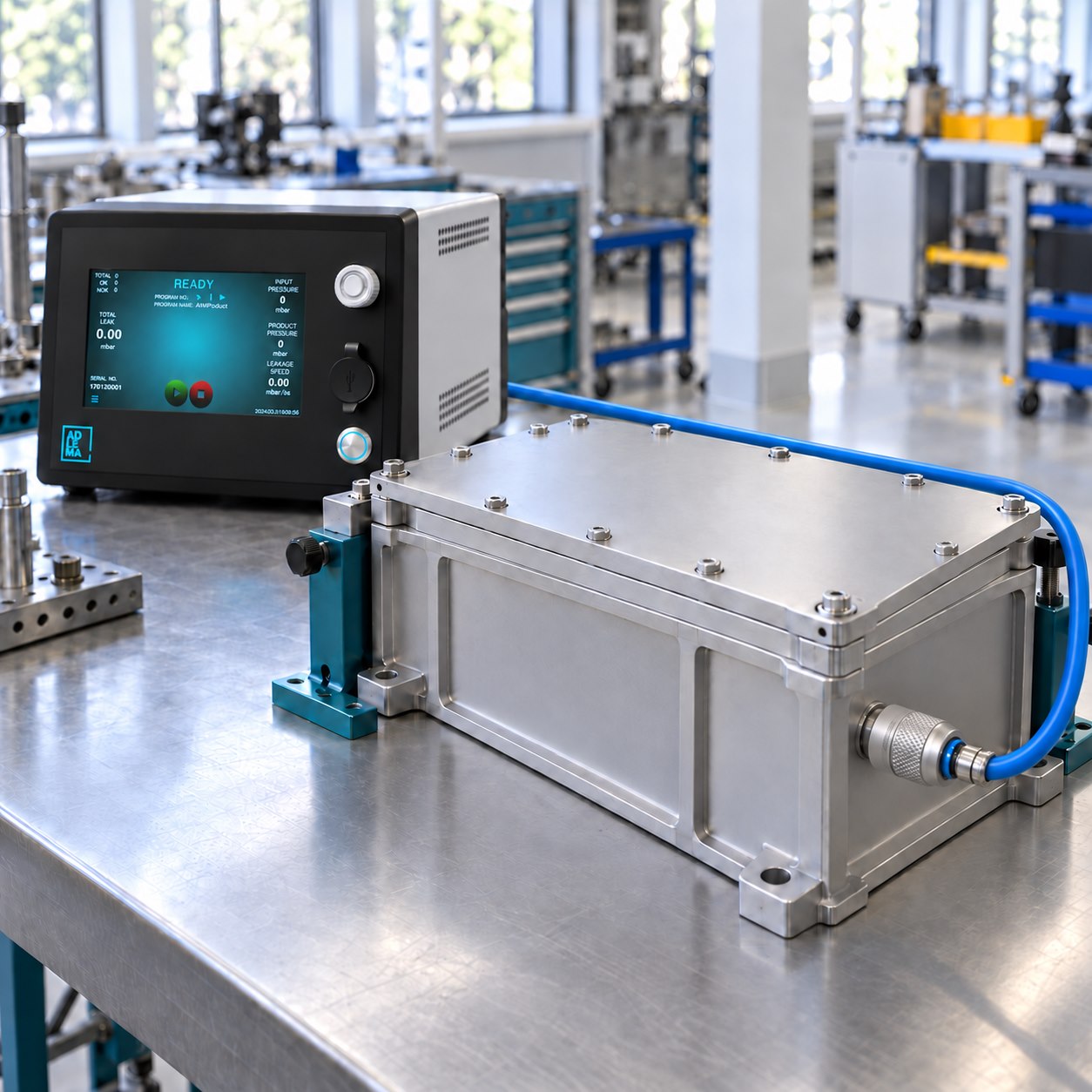
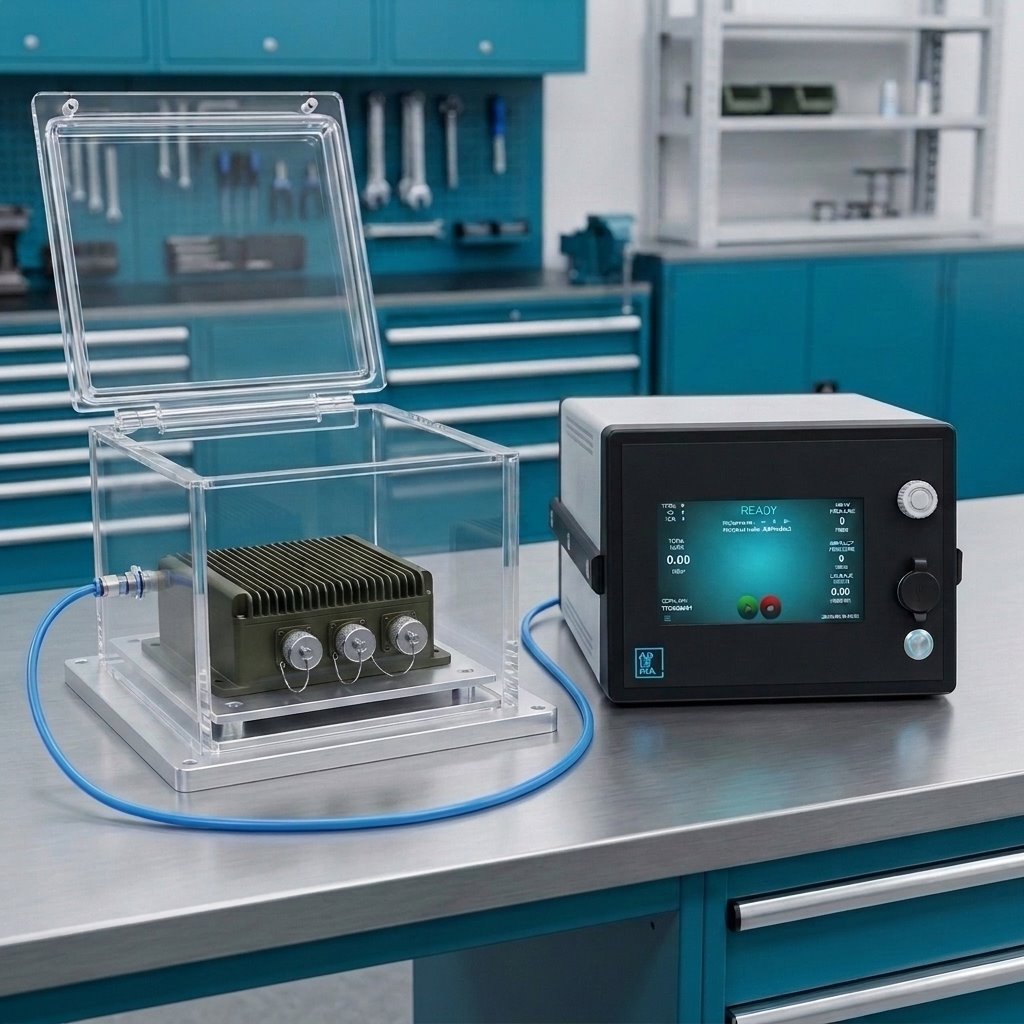
IP67, per IEC 60529, defines withstanding thirty minutes of immersion at a depth of one meter. For type approval the immersion test is still carried out. In series production, however, every part can be checked without water using the pressure decay method: the box is tested in a closed volume and its tightness is read from the pressure change. The part stays dry and the result is recorded as a number.
How does a differential pressure decay test work?
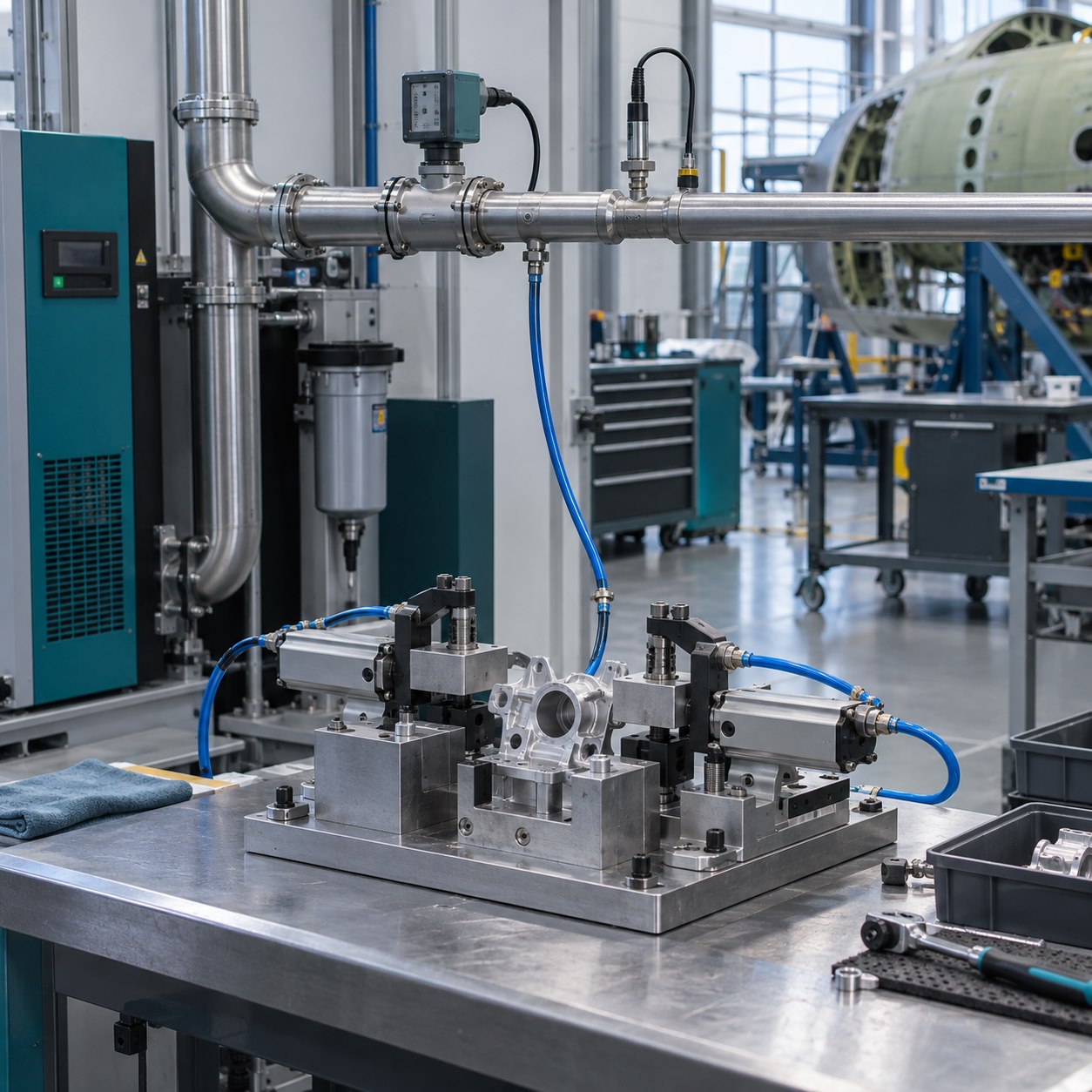
The part under test and a leak-tight reference volume are filled to the same pressure. The instrument tracks the pressure difference between the two; if the part leaks, the difference grows. The Adlema BT4000 measures with 0.1 Pa resolution at a test pressure of 1 bar. If the difference stays below the reject limit, the part passes.
When is a helium leak test needed?
When the allowed leak rate is too small to measure by pressure decay, or when you need to know not just that there is a leak but where it is. Hermetic connectors and electro-optical housings are tested in a vacuum chamber with a mass spectrometer; on large parts such as fuel tanks the leak is located with a sniffer probe.
How are test results matched to the part's serial number?
The part is read from a barcode or laser marking and the test result is written to that identity. The test instruments come with Modbus RTU; with Profinet, EtherCAT and Ethernet TCP/IP options they connect to the existing PLC and production software. Results can also be exported to Excel via USB.
How are leak test instruments calibrated?
Adlema's pressure calibration laboratory is accredited by TÜRKAK to ISO/IEC 17025 (AB-0345-K). Calibration is brand-independent; test instruments and pressure instruments from other manufacturers are calibrated as well. The service can be provided on site.
What do AV Track and ATS Cloud do?
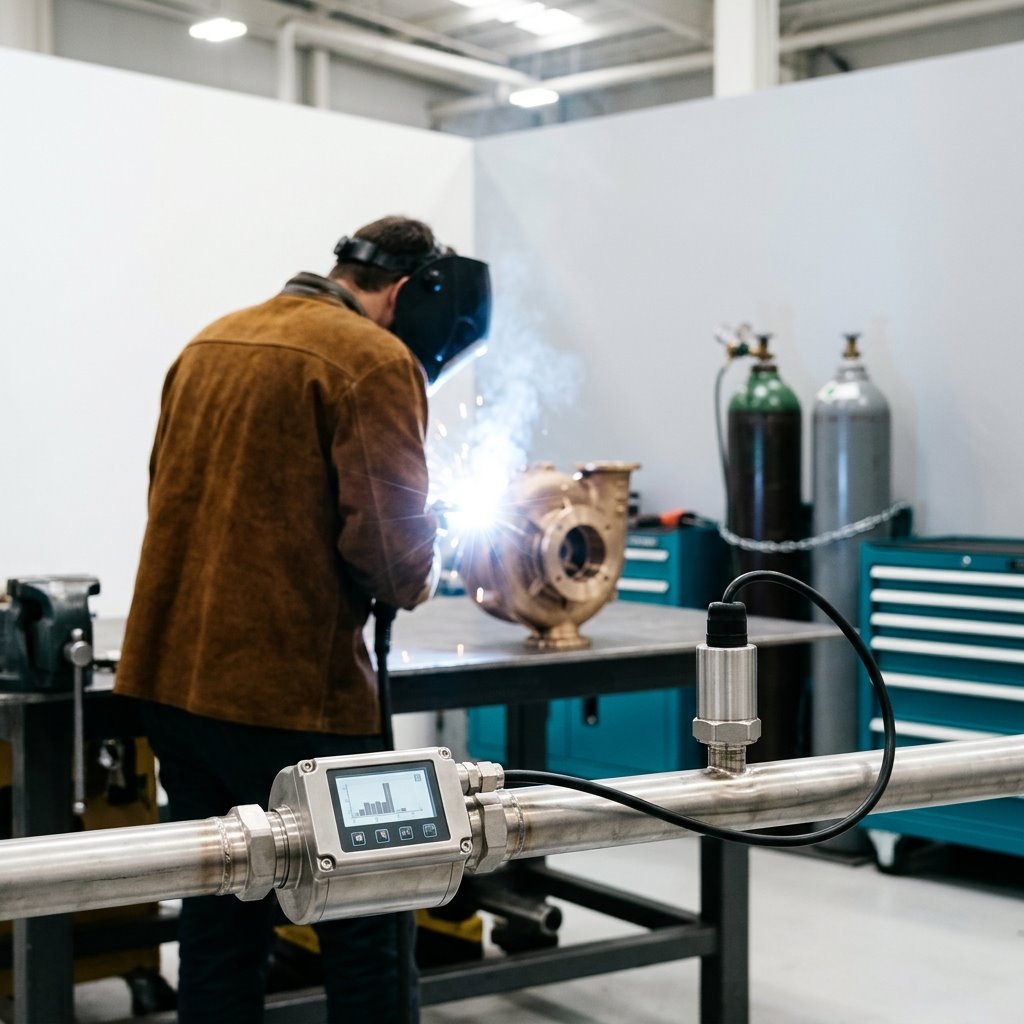
AV Track monitors compressed air and gas lines: dew point, flow, pressure, leaks and the compressor's specific consumption appear on one screen. ATS Cloud monitors electricity, water and natural gas consumption by line and shift, raises an alarm when a target value is exceeded and automatically produces ISO 50001-compliant reports. Together they keep the record of the conditions under which the part was made.
How do we start working with Atasayın?
Share your part's technical drawing or the problem you have in production. The right test method and measuring points are determined by trials on a sample part; then the instrument, fixture, software and on-site installation are delivered as one project.